There’s a version of the Tower everyone knows. Lightning strikes, the top blows off, two figures fall through the air, and by the time the dust settles the thing is simply gone. Sudden. Total. You don’t have to manage a Tower like that. You just have to survive the fall and start again.
Nobody adequately prepares you for the reversed version. The Tower that still hasn’t fallen yet. The Tower that grinds down slowly instead, one compromised beam at a time, while everyone still inside it keeps decorating the upper floors like the foundation isn’t already cracked.
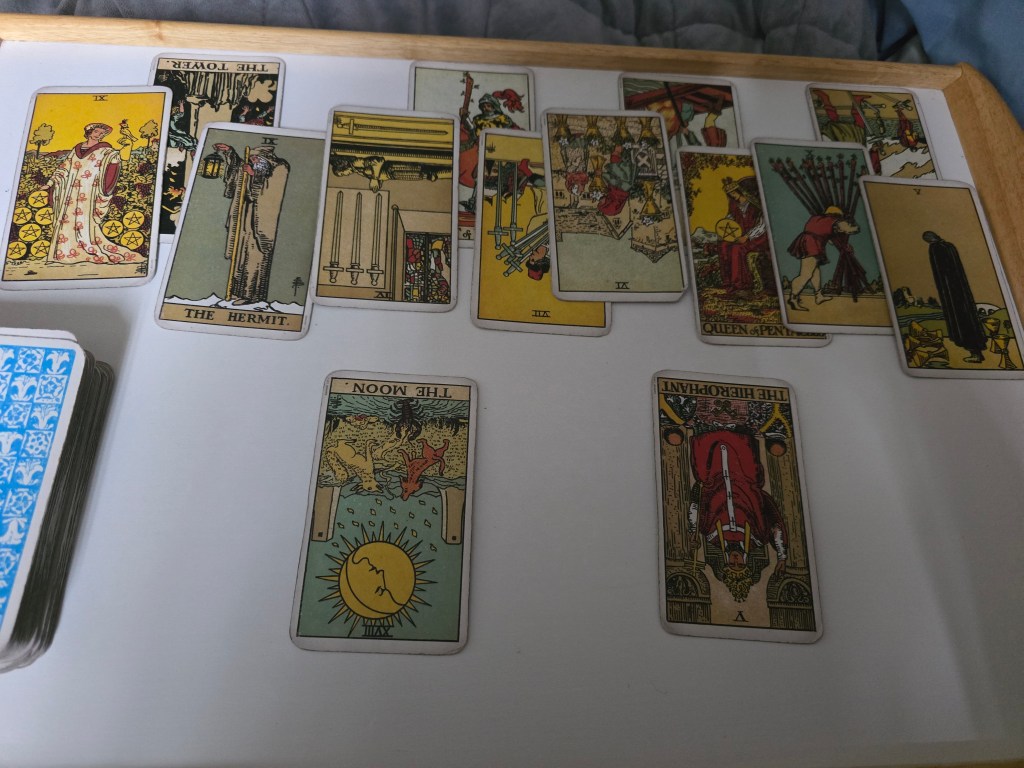
I pulled a reading this morning to figure out why I was still grieving something I’d already left. The card that answered “what is this grief, really” was Tower reversed. Not the sudden collapse. The slow one. And once it landed I understood why the grief hadn’t resolved the way grief is supposed to: I wasn’t mourning an ending. I was watching an ending that refuses to finish.
The Grief of Being Early
Here’s the part nobody tells you about seeing a system clearly before it’s ready to be seen: it’s lonely in a very specific way.
Not the loneliness of being excluded. Not the loneliness of a door closing behind you. A colder kind. The loneliness of standing outside a structure, watching it grind itself down in plain sight, while the people still inside it are decorating rooms in a building whose foundation you’ve already mapped the cracks in. You’re not locked out. You’re just early, and early is its own kind of solitude, because there’s no one yet who can fully see what you’re seeing. Now it’s one thing when it’s just one structure you’re observing. But considering that this is happen across multiple institutions, the pain just keeps compounding.
The clarification card in that same position was the 9 of Pentacles: a woman standing alone in a garden she built herself, resourced, self-sufficient, entirely independent of the structure she can see failing behind her. That’s not a small mercy. If you’re going to be early to a collapse, better to be early from solid ground than from inside the building. But The Hermit appearing in the shadow position indicated that solid ground doesn’t cancel the grief. It just means you get to grieve from somewhere safe instead of somewhere burning.
The Restlessness That Has Nowhere to Land
The next card in the spread named the resistance to actually feeling any of this: a restlessness to do something, anything (Knight of Wands upright), paired with a mind that simply will not rest (4 of Swords reversed). If you’ve built a practice, a business, a body of work out of your own two hands after leaving a structure that failed you, you already know this particular restlessness. It’s the same instrument that got you out. It’s also the thing standing between you and ever fully putting the fight down (7 of Swords reversed).
The mind that spots the mechanism of institutional failure is a genuinely useful mind. It is also, without an off switch, a mind that keeps auditing a building it doesn’t live in anymore, long after there’s anything left for it to do there.
The First Step Is Smaller Than You Think
I asked the cards for the actual first move, no vague spiritual gesture, just the real thing. What came back was the 6 of Swords, reversed: the ferryman’s crossing, but this time read as permission to simply stop rowing. Set the cargo down mid-passage. You don’t have to finish arriving somewhere before you’re allowed to put the weight down.
That’s harder than it sounds if your instinct, like mine, is to stay future-focused out of frustration rather than peace, to keep building forward because stopping feels like losing ground rather than like rest. The 6 of Cups reversed showed up right alongside it as a refusal of nostalgia: don’t go soft and sentimental about what’s crumbling, stay oriented toward what’s next. But underneath both of those cards sat something quieter and more honest (Queen of Pentacles upright), a resentment that hard won skill was never properly valued by the structure that trained it. That resentment doesn’t need to be argued with. It just needs to be acknowledged as real, so it stops needing to prove itself through more grinding.
The Fear Underneath the Fight
Here’s the fear I didn’t expect: not fear of losing. Fear of the fight simply being over (5 of Swords reversed). Accepting that the battle has already concluded, win or lose, and finding there’s nothing left to actively push against. That fear showed up right next to its opposite, the sense of being left holding all the baggage regardless of whether the fight is finished (10 of Wands upright), and underneath both of those sat the flattest, most honest card in the whole reading: there are things I lost that are not coming back (5 of Cups upright).
No amount of reframing changes that last one. Some things don’t come back. The grief doesn’t need managing into something more palatable. It just needs to be let alone long enough to be what it actually is.
What Happens If You Don’t Process It
The cost of skipping all of this, of staying restless and precise and never setting the cargo down, is not confusion. Rather the Moon reversed indicates the opposite. It’s staying completely, permanently correct about what you’re seeing, and completely alone inside that correctness. Clarity without company. That’s the real risk of being early to a collapse: not that you’re wrong, but that being right doesn’t automatically buy you anyone to stand next to while you watch it happen.
The Other Side of It
And then the card that closes the whole reading was The Hierophant reversed, the potential waiting on the far side of actually feeling this instead of running from it: an authority that is a complete breakaway from the corrupted one. Not reform from inside a structure that was never going to reform itself. Not waiting for a system to finally deliver a verdict it was never built to deliver. A new legitimate authority, built entirely outside the old one’s permission, standing on its own foundation, answerable to its own terms.
That’s not a hypothetical card for me. It’s the thing I’m already standing on. It’s what happens when you stop waiting for the tower to finish falling and start building somewhere the tower’s collapse can’t reach you.
If You’re Watching Your Own Slow Tower
If you’re in the middle of this right now, watching something grind down instead of collapse cleanly, still doing the emotional labour of a place that already told you, in a hundred small ways, that it was done with you, the cards have a fairly unambiguous message: you’re not wrong for grieving something that hasn’t technically finished falling yet. Slow endings are still endings. And you don’t need the tower to hit the ground before you’re allowed to walk away from the wreckage and start building somewhere solid.
If this is where you are, a reading can help you find the actual shape of what you’re carrying and the first real step out from under it. That’s the work.
Tarot with teeth. Insight with soul.
Processing the Grief: The Full Reading
Feel free to use this spread for your own practice!
1. The Grief: What is this grief, really? Not the cause but the raw, unfiltered truth of how it lives in you.
Answer: The Tower reversed
Clarification: 9 of Pentacles upright
Shadow: The Hermit upright
2. The Resistance: What’s stopping you from facing it head-on?
Answer: Knight of Wands upright
Clarification: 4 of Swords reversed
Shadow: 7 of Swords reversed
3. The First Step: What’s the actual first thing you need to do? No vague shit!
Answer: 6 of Swords reversed
Clarification: 6 of Cups reversed
Shadow: Queen of Pentacles upright
4. The Fear: What are you afraid will happen if you let yourself feel this?
Answer: 5 of Swords reversed
Clarification: 10 of Wands upright
Shadow: 5 of Cups upright
To be drawn after the core spread:
Ultimate Shadow: What happens if you don’t process this? The cost of avoidance.
The Moon reversed
Ultimate Energy: What’s on the other side if you do? The potential waiting for you.
The Hierophant Reversed


Leave a Reply